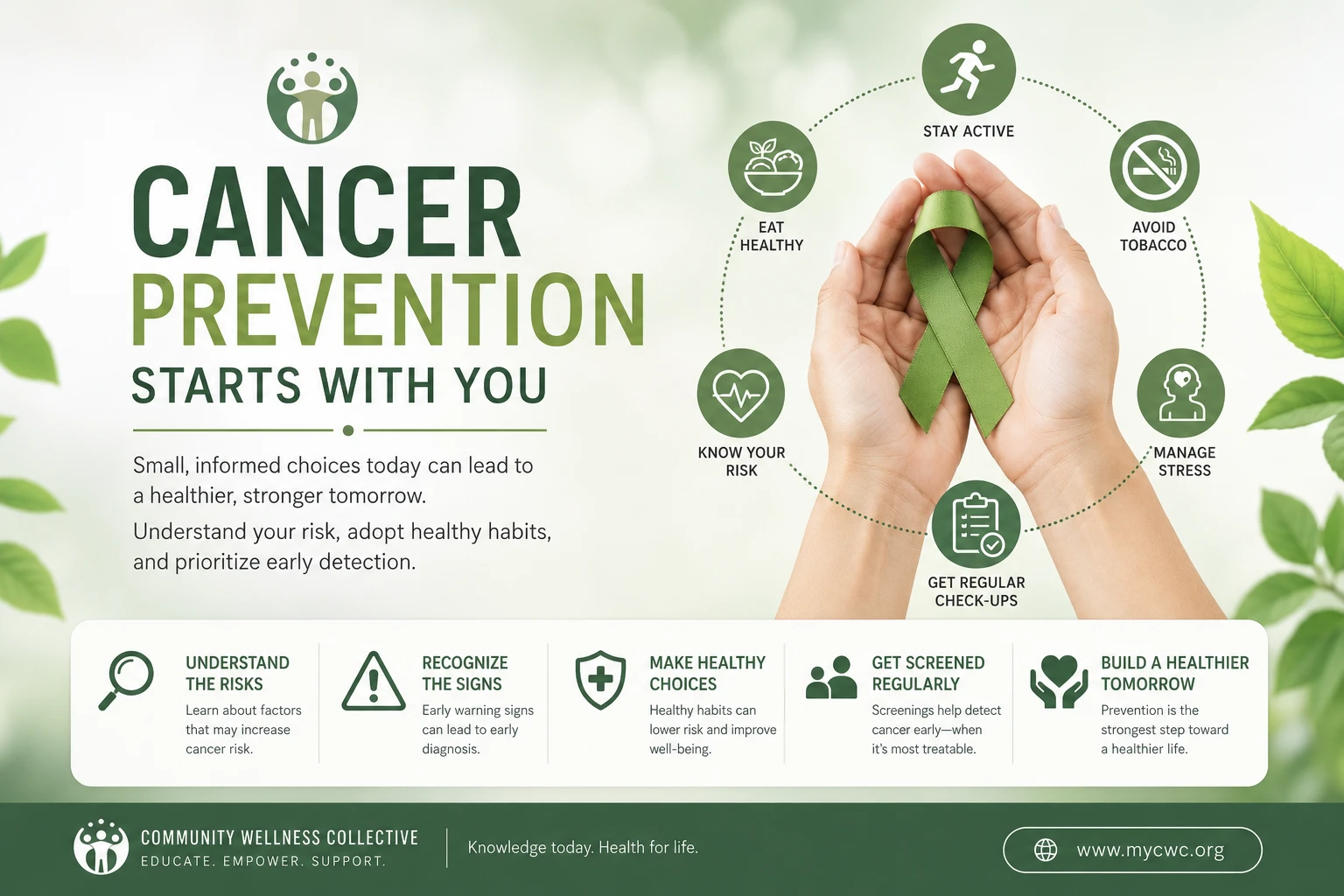
Prevention begins with understanding how cancer risk develops and what proactive steps individuals can take to protect their long-term health. At Community Wellness Collective, we provide trusted guidance, education, and resources to help you recognize risk factors, adopt healthier lifestyle habits, and stay informed about early warning signs. While no approach can completely eliminate cancer risk, informed decisions and preventive care can significantly improve overall well-being and early detection outcomes.
Understanding Prevention and Cancer Risk
Prevention begins with understanding how cancer risk develops and how individuals can support their long-term health. While no approach can eliminate cancer risk entirely, learning about screening, early warning signs, and everyday lifestyle choices may help people make informed decisions and stay more connected to their health over time.
What is Cancer Prevention & Risk Awareness?
Cancer Prevention & Risk Awareness refers to actions taken to lower the chances of developing cancer. These include lifestyle changes, regular screenings, and awareness of environmental and genetic risk factors. Prevention is not just about avoiding disease—it’s about building a foundation for long-term health and resilience.
Understanding Cancer Prevention & Risk Awareness Factors
Cancer Prevention & Risk Awareness can be influenced by multiple factors, including:
Lifestyle factors – smoking, poor diet, lack of exercise
By understanding these risks, individuals can make informed choices to reduce their chances of developing cancer.
Prevention and Long-Term Health
Understanding prevention can help individuals make informed decisions about their health. Prevention often includes learning about risk factors, exploring appropriate screening options, and developing lifestyle habits that support long-term well-being.
Some risk factors are related to genetics or family history, while others may be influenced by environmental exposures or lifestyle patterns. Understanding these factors may help individuals and families have more informed conversations with their healthcare providers.
Screening and early detection can also play an important role in identifying certain cancers at earlier stages. Many individuals explore prevention not only to reduce risk but also to better understand their health and recognize when medical guidance may be helpful.
This page highlights several areas individuals often explore when thinking about prevention and long-term health, including risk factors, screening considerations, and everyday wellness practices that support overall well-being.
Key Areas of Prevention
Understanding personal and family health history
Recognizing lifestyle and environmental influences
Exploring appropriate screening options
Learning early warning signs
Supporting long-term health and resilience
Understanding Risk Factors
Understanding risk factors can help individuals better recognize influences that may affect cancer risk. Some risk factors cannot be changed, such as age, genetics, or family history. Others may relate to environmental exposures, lifestyle patterns, or long-term health conditions.
Learning about these factors can help individuals have more informed conversations with healthcare providers about screening and prevention strategies.
Examples of commonly discussed risk factors may include tobacco exposure, certain environmental exposures, long-term inflammation, and family health history. Understanding these factors does not predict whether cancer will occur, but it may help individuals become more aware of health patterns and potential areas for discussion with medical professionals.
Education around risk factors can empower individuals to better understand their health and consider steps that may support long-term wellness.
Risk Factors To Review
Family history
Genetic considerations
Environmental exposures
Tobacco or alcohol use
Metabolic health
Screening and Early Detection
Screening and early detection programs are designed to identify certain cancers before symptoms appear or at earlier stages when treatment options may be more effective.
Different screening recommendations exist depending on age, medical history, and family history. Examples include mammography for breast cancer, colonoscopy for colorectal cancer, and other screening tools recommended by healthcare providers.
Early detection does not guarantee prevention, but it may allow individuals to identify potential concerns sooner and begin appropriate medical evaluation.
Many people explore screening options as part of routine health care. Speaking with a healthcare provider about recommended screening schedules may help individuals understand which options are appropriate for their situation.
Questions To Ask
What screenings apply to me now?
Should I start earlier?
How often should I repeat them?
Are there updated guidelines?
Lifestyle and Wellness
Lifestyle and wellness practices are often part of broader conversations about prevention. These practices may help support overall health and resilience over time.
Examples may include balanced nutrition, stress awareness, restorative sleep, and supportive daily routines that help maintain overall well-being.
While lifestyle choices alone cannot eliminate cancer risk, many individuals explore wellness habits that support long-term health and help them stay more connected to their bodies and overall wellness.
These practices are often most sustainable when approached gradually and in ways that fit comfortably into everyday life.
Nutrition plays a key role in overall health and recovery. Building simple, sustainable habits can help support energy, resilience, and long-term well-being.
Emotional well-being is an important part of healing. Practices like mindfulness, connection, and stress awareness can help support balance and resilience.
Some individuals explore integrative approaches like meditation, breathwork, or gentle movement. These practices may help support overall well-being and calm.